The Spoon Theory by Christine Miserandino
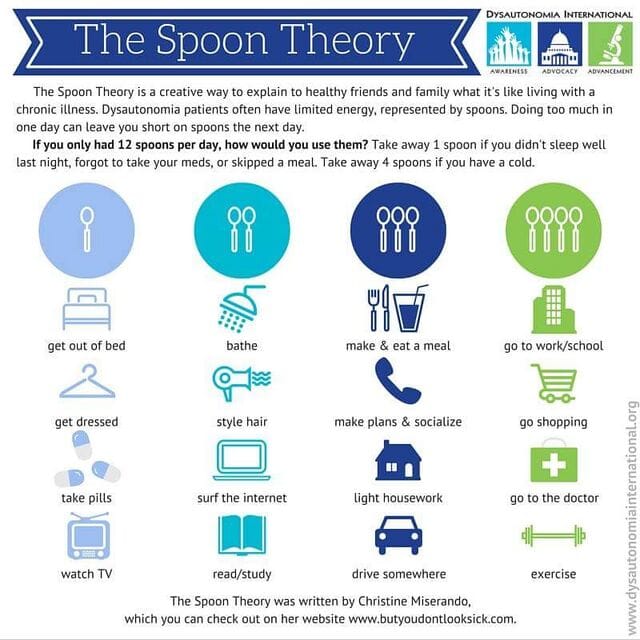
This is the "original" Spoon Theory chart straight from Dysautonomia International's website.
Key Facts
- Every activity “costs” spoons.
- Getting dressed, cooking, showering, or going out may each take 1 or more spoons.
- Unlike healthy people, spoonies don’t start the day with unlimited energy.
- People with chronic illness have a limited number of spoons per day.
- Some days may start with 12 spoons, others with 3—depending on symptoms, stress, or flares.
- Once you're out of spoons, you're done for the day.
- Rest is the only way to regain spoons—there’s no pushing through without consequences (like worsening symptoms).
- Planning is essential.
- Spoonies often have to think carefully about how to spend their energy—what to prioritize and what to skip.
- It’s not just about being tired.
- Spoon theory describes physical, mental, and emotional exhaustion that is disproportionate to the effort required.
- It helps explain the invisible.
- Spoon Theory has become a widely-used tool in the chronic illness and disability communities to explain energy limits to others who may not understand.
- "Spoonie" is a term of identity.
- Many people with chronic illnesses call themselves "spoonies" to connect with others who understand the struggle.
💬 Why It Matters
The Spoon Theory gives language to the often invisible battles people with chronic illness face daily. It helps foster compassion, awareness, and self-advocacy.